
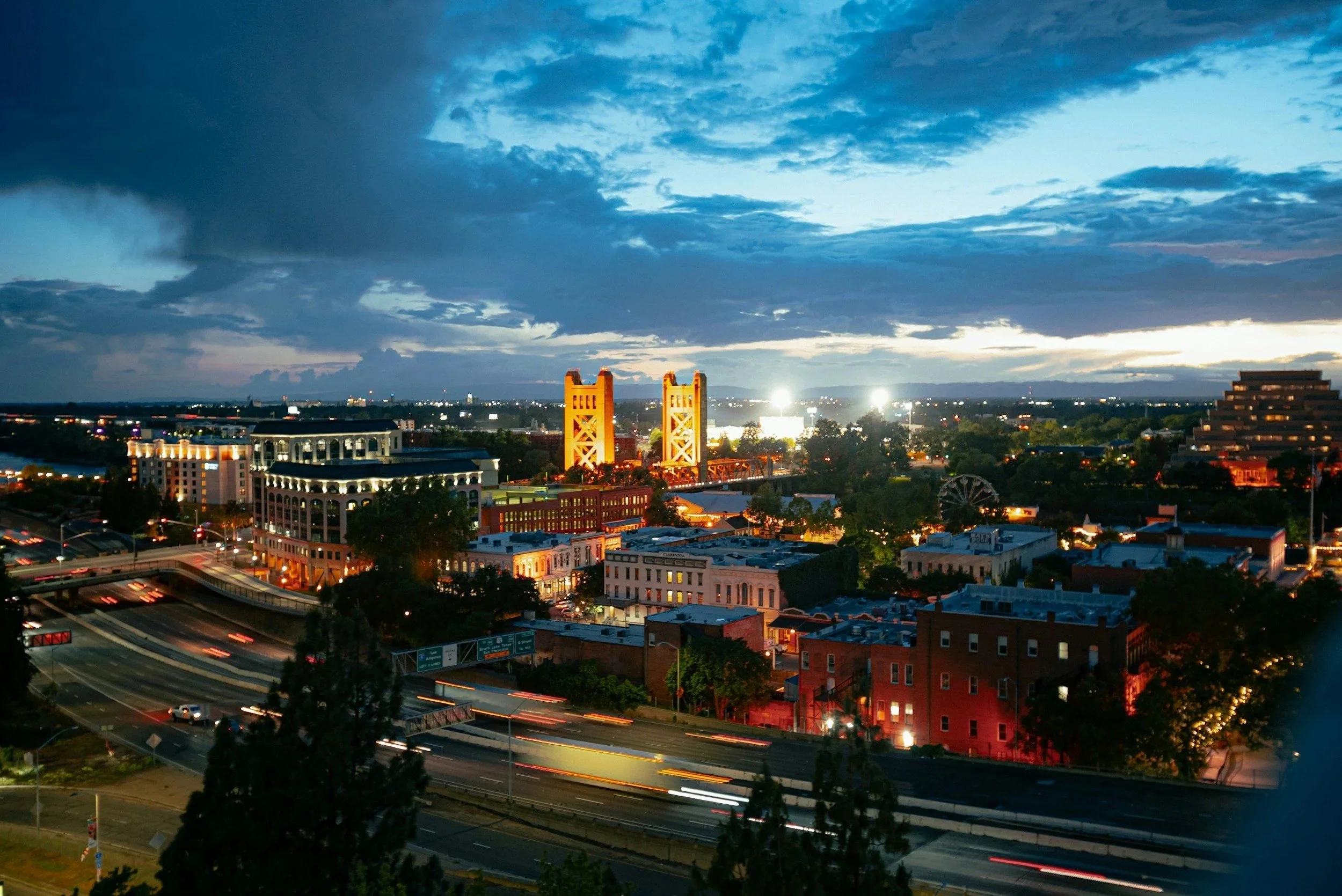

Buying a Home in East Sacramento, Midtown, or Land Park: The Urban Core Guide
These are the three most established neighborhoods in the city, and they behave differently from the rest of the region. Expect roughly $650,000 to $815,000 depending on the pocket and the source you read, homes built before 1940, almost no HOA dues, and a real chance your purchase price lands above the FHA limit and near the conforming ceiling. Buyers who understand that last part before they shop have a much easier time here.
What These Three Neighborhoods Actually Cost
Price data in the urban core varies more than anywhere else in the region, because the sample sizes are small and the housing stock is wildly inconsistent. A 1,100-square-foot bungalow and a 3,400-square-foot Fab Forties Tudor sit four blocks apart. Treat every median as a range, not a number.
Neighborhood
2026 price range across sources
Price per sq ft
Character
East Sacramento
Roughly $725,000 to $792,000
Around $568 and rising
Fab Forties, McKinley Park, River Park. Largest homes, strongest demand, fastest sales.
Midtown
Roughly $649,000 to $727,000
Around $474
Grid living. Victorians and bungalows next to modern infill and condos. Highest walkability.
Land Park
Roughly $649,000 to $814,000
Around $513
Tree canopy, William Land Park, the zoo. Wide spread between the park edge and southern pockets.
For context, the city of Sacramento overall sits near $500,000 and the broader Sacramento-Roseville metro runs closer to $574,000. **The urban core carries a meaningful premium over both**, and the reason is simple: nobody is building new single-family homes in these neighborhoods. Supply is fixed. Demand is not.
The Financing Detail That Catches People Here
This is the practical difference between buying in East Sacramento and buying in Elk Grove, and it comes down to two numbers.
2026 Sacramento-area limit
Amount
What it means in these neighborhoods
FHA single-unit limit
$763,600
A large share of East Sacramento and Land Park inventory sits at or above this. FHA is often off the table.
Conforming loan limit
$832,750
Above this, you are in jumbo territory — different underwriting, reserves, and pricing.
Practical takeaway
—
On a $780,000 purchase with 10% down, your loan is $702,000 — conforming. On the same home with 3% down, you are close to the ceiling.
The result is that down payment strategy in the urban core is not just about cash. It is about which side of a threshold your loan amount lands on. Moving from 5% down to 10% down on an East Sacramento purchase can be the difference between jumbo underwriting and conforming, and that is worth real money in rate and simplicity.
time-sensitive figures
Freddie Mac’s weekly average 30-year fixed rate was 6.58% as of July 23, 2026 (15-year: 5.96%). Rates move weekly — confirm before this post goes live.
2026 Sacramento-area loan limits: conforming $832,750 (1-unit), $1,066,000 (2-unit); FHA single-unit $763,600. Verify against FHFA and HUD before publishing.
Neighborhood price figures conflict meaningfully across sources. East Sacramento: Redfin reported a $725K median in March 2026 while Zillow showed a $791,583 average home value. Midtown: Redfin reported $727K in February 2026 on only six recorded sales — a very small sample. Land Park: Movoto reported an $814K median list price in July 2026 while other sources showed roughly $740K. Refresh all figures and cite sources explicitly at publication.
Price per square foot figures move quickly in low-inventory neighborhoods. Re-pull before publishing.
East Sacramento: The Premium End
East Sac is the closest thing Sacramento has to a blue-chip neighborhood. The Fabulous Forties — the numbered avenues east of Alhambra — hold the largest and most architecturally serious homes in the city. McKinley Park anchors the middle. River Park, tucked along the American River near Sac State, offers smaller mid-century homes at a lower entry point.
Homes here move fast, often in under three weeks, and they hold value better than almost anything else in the region. The tradeoff is that you are competing for a fixed supply against buyers who have been waiting for the right house for a year.
What to budget for
• **Older systems.** Much of the stock predates 1940. Knob-and-tube wiring, galvanized supply lines, original sewer laterals, and foundations that have settled are all common findings.
• **Sewer lateral inspection.** Worth doing here specifically. Replacement can run well into five figures.
• **Detached garages and narrow driveways.** Parking is a real consideration on the numbered avenues.
Midtown: Density, Walkability, and Mixed Product
Midtown is the grid — numbered and lettered streets, mature street trees, and the highest concentration of restaurants, bars, and small retail in the region. It is the one Sacramento neighborhood where a buyer can genuinely live without driving much.
It is also the most varied product type in the city. On one block you will find a restored Victorian, a 1920s fourplex, and a five-year-old condo building. Each of those finances differently.
Three financing notes specific to Midtown
1. **Condos require project approval.** If the unit is legally a condominium, the building gets underwritten too — owner-occupancy ratios, HOA reserves, commercial space percentage, and litigation status all matter. Check the project before you write an offer.
2. **Duplexes and fourplexes are genuinely available here.** Midtown has more small multi-unit stock than anywhere else in the city, which makes it one of the best house-hacking markets in the region. Owner-occupied multi-unit financing can go as low as 3.5% down on FHA, subject to the self-sufficiency test on three and four-unit properties.
3. **Mixed-use buildings complicate things.** Ground-floor commercial space above roughly 35% of the building can push a project out of conventional eligibility entirely.
Land Park: The Tree Canopy Premium
Land Park is defined by William Land Park itself — the zoo, Fairytale Town, the golf course — and by the mature canopy that makes the neighborhood ten degrees more tolerable in a Sacramento August. Housing stock skews Tudor and Craftsman, mostly early twentieth century, mostly without HOA dues.
The price spread here is the widest of the three. Homes near the park edge in 95818 command a substantial premium over pockets in the southern reaches of 95822. Two homes of similar size a mile apart can differ by $200,000 or more, and the reason is location within the neighborhood rather than anything about the house.
Curtis Park, just to the east, is functionally part of the same market and worth including in your search. Similar architecture, similar age, occasionally better value.
The Renovation Angle Nobody Uses Enough
Here is a strategy that fits these three neighborhoods better than almost anywhere in the region. The urban core is full of homes with excellent bones and dated everything — original kitchens, one bathroom, systems from the Eisenhower administration.
Those homes sit on the market longer and sell for less, because most buyers cannot see past the work and cannot fund it after closing. A renovation loan solves both problems by financing the purchase and the improvements in a single mortgage based on the after-renovation value.
In a neighborhood where the land and the location carry most of the value, buying the tired house and fixing it is frequently the best available deal on the block. It is also the only real way to compete when every move-in-ready listing draws six offers.
What You Give Up, Honestly
The urban core is not the right answer for everyone, and it is worth being direct about the tradeoffs.
• **Price per square foot is the highest in the region.** You are paying meaningfully more for less house than you would in Elk Grove, Natomas, or Rancho Cordova.
• **Maintenance is real.** Century-old homes need ongoing attention that a 2018 build does not.
• **Schools require research.** Sacramento City Unified performance varies substantially by school, and many families here go the charter, magnet, or private route. Do this homework before you buy, not after.
• **Parking and lot sizes are tight** compared to suburban alternatives.
What you get in exchange is a fixed-supply neighborhood with genuine architectural character, walkability, no HOA, and the most durable resale demand in the county. For the right buyer that is an obvious trade. For a family that wants four bedrooms and a yard, it usually is not.
How much does a house cost in East Sacramento?
Reported figures for 2026 range from roughly $725,000 to $792,000 depending on the source and the month, at around $568 per square foot. The spread is wide because the neighborhood contains everything from small River Park mid-century homes to large Fabulous Forties estates.
Can I use an FHA loan in East Sacramento or Land Park?
Sometimes, but the 2026 FHA single-unit limit for the Sacramento area is $763,600, and a significant share of inventory in these neighborhoods prices above it. FHA works more often in Midtown, in smaller East Sacramento and River Park homes, and in the southern portions of Land Park.
Do East Sacramento, Midtown, and Land Park have HOA dues?
Most single-family homes in all three neighborhoods have no HOA. That is one of the underappreciated financial advantages of buying in the urban core. Condominiums and some newer infill developments do carry dues, and those count fully against your debt-to-income ratio.
Is Midtown Sacramento good for house hacking?
It is one of the better markets in the region for it. Midtown has more small multi-unit inventory — duplexes, triplexes, and fourplexes — than most Sacramento neighborhoods, and owner-occupied multi-unit financing is available with as little as 3.5% down on FHA. Three and four-unit properties must pass FHA’s self-sufficiency test, which is the detail that decides most of these deals.
Are homes in these neighborhoods hard to insure?
Generally easier than foothill properties, since wildfire exposure is low in the urban core. The more common issue is age-related: carriers increasingly ask about roof age, electrical panel type, knob-and-tube wiring, and plumbing material. Get an insurance quote during your inspection period rather than assuming coverage will be routine.
What is the difference between Land Park and Curtis Park?
They are adjacent neighborhoods with similar early twentieth-century architecture and comparable appeal. Land Park is anchored by William Land Park and generally commands a premium closer to the park. Curtis Park is slightly smaller and sometimes offers better value for similar homes. Most buyers looking seriously at one should be searching both.
Should I buy a fixer in the urban core?
It is often the strongest available value in these neighborhoods, because dated homes draw far less competition than updated ones while sitting on the same land in the same location. A renovation loan lets you finance the purchase and the work together based on the after-renovation value, which is what makes the strategy practical rather than theoretical.
Shopping the Urban Core? Know Your Thresholds First.
In these neighborhoods the useful conversation happens before you tour anything: where your purchase price lands relative to the FHA and conforming limits, how your down payment changes that, and whether a renovation loan opens up listings other buyers are skipping.
Serving buyers in East Sacramento, Midtown, Land Park, Curtis Park, River Park, and throughout Sacramento, Placer, El Dorado, and Yolo counties.
Call or text (916) 794-0777 | thechriskennedyteam.com
The Chris Kennedy Team | Reliant Lending | NMLS #971546. Serving Sacramento, Placer, El Dorado, and Yolo counties. This article is for general educational purposes only and is not a commitment to lend, an offer of credit, or financial, tax, or legal advice. Program terms, guidelines, and rates are subject to change without notice. Equal Housing Opportunity.